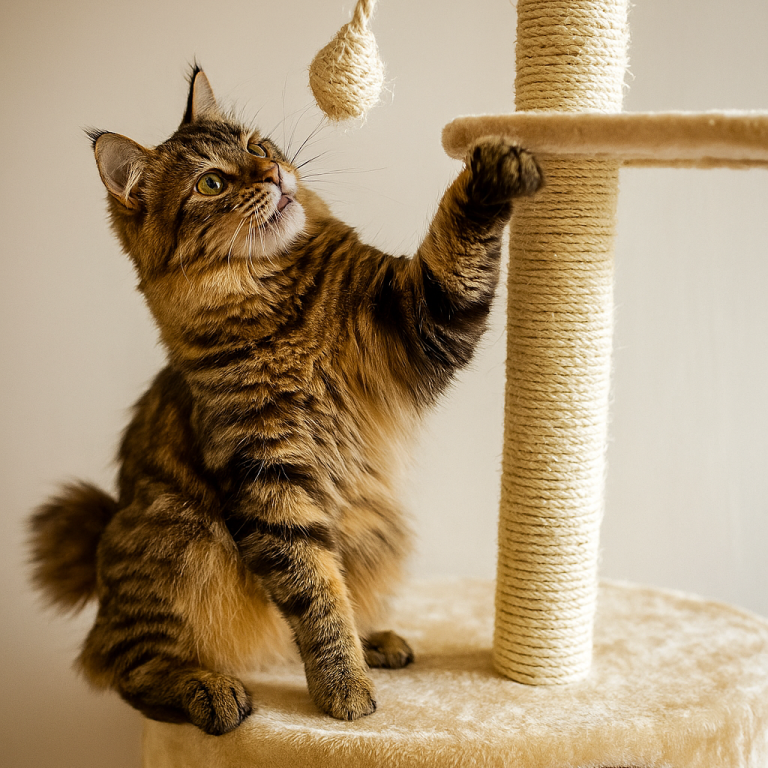
American Bobtail Cat
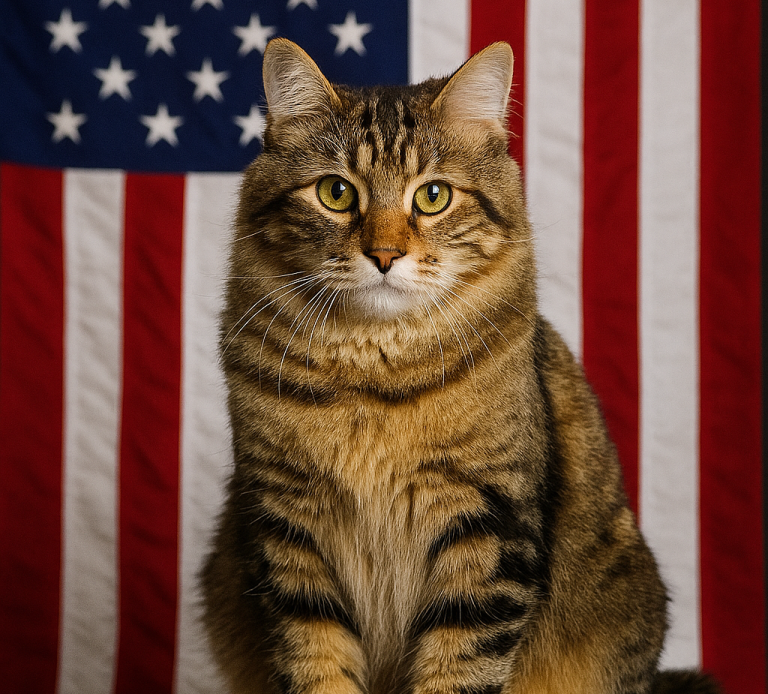
The American Bobtail is a distinctive and affectionate cat breed known for its short, “bobbed” tail, which is the result of a natural genetic mutation. With a muscular build, shaggy coat, and a look that hints at wild ancestry, this breed is both striking and sociable.
History of the American Bobtail
The American Bobtail cat breed was developed in the late 1960s in the United States, inspired by a naturally short-tailed stray found in Arizona. It’s a relatively young breed with no direct relation to other bobtail cats.
Origins and Development
Discovery: The breed began when a couple found a short-tailed male cat during a vacation in Arizona. They bred him with a domestic female, and the kittens inherited his distinctive tail.
Genetics: The bobbed tail results from a dominant genetic mutation affecting tail development—distinct from the recessive mutations seen in breeds like the Japanese Bobtail.
Breed Recognition: Breeders selectively developed the American Bobtail for its wild appearance and affectionate nature. It gained recognition from major cat associations like CFA and TICA over time.
Not Related to Other Bobtails
Despite the name, the American Bobtail is not genetically linked to the Japanese Bobtail, Kurilian Bobtail, or Cymric cat. Each has a different mutation and breeding history.
Modern Appeal
Today, American Bobtails are celebrated for their dog-like loyalty, intelligence, and adaptability. Their rugged look and gentle temperament make them popular in therapy work and family settings.
Physical Traits
Tail: Their most iconic feature—a naturally short, bobbed tail that’s typically one-third the length of a normal cat’s. It may be straight, kinked, or slightly curved, and is highly expressive.
Size: Medium to large build. Adult height ranges from 10 to 14 inches, and weight spans 7 to 18 pounds, with males typically larger.
Body: Muscular and athletic, with a broad chest and sturdy frame. They have a wild, rugged look reminiscent of a lynx or bobcat.
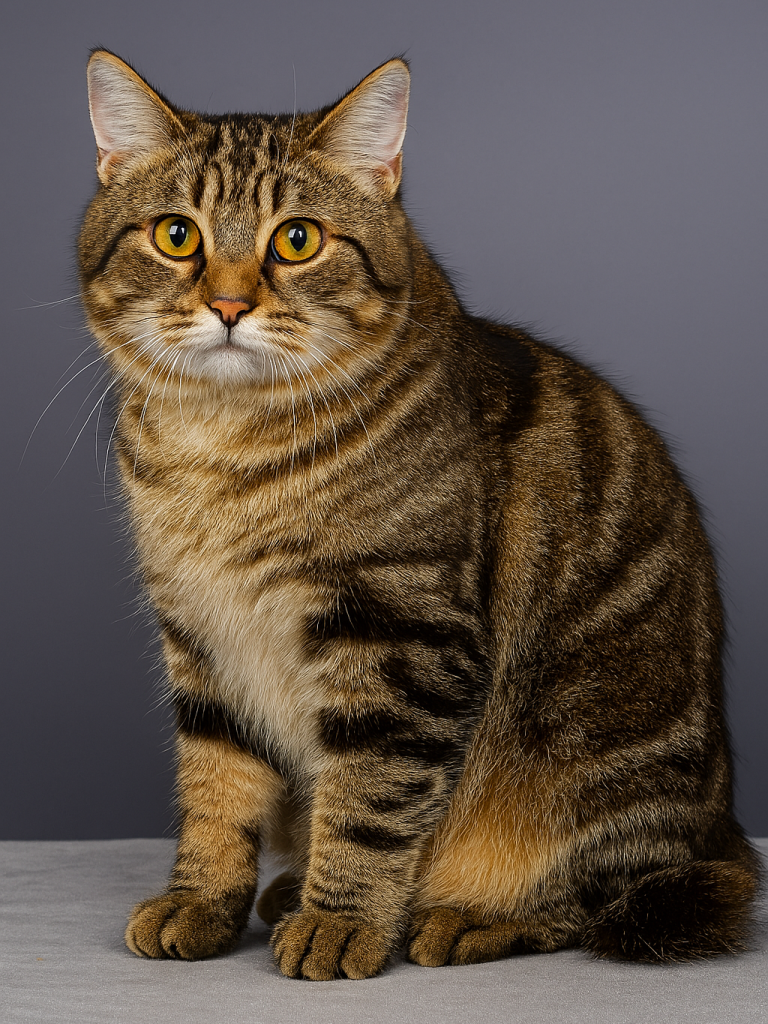
Coat: Dense and shaggy, with both shorthaired and longhaired varieties. The coat is water-resistant and comes in a wide range of colors and patterns.
Head and Eyes: Broad, wedge-shaped head with prominent cheekbones. Eyes are large, almond-shaped, and expressive—often described as “hunter’s eyes”.
Legs and Paws: Hind legs are slightly longer than the front, giving them a powerful stance. Paws are large and round, sometimes with tufts of fur between the toes
Personality and Behavior
Affectionate & Loyal: Often called the “Golden Retriever of the cat world,” American Bobtails form strong bonds with their people. They enjoy cuddles, lap time, and following you from room to room.
Intelligent & Curious: These cats are problem-solvers and quick learners. Many enjoy puzzle toys, leash training, and even games like fetch.
Playful & Energetic: Bobtails retain kitten-like energy well into adulthood. They love interactive play and can entertain themselves with toys or explore new environments.
Social & Adaptable: They tend to get along well with children, other cats, and even dogs. Their calm demeanor makes them excellent therapy animals.
Vocal but Not Loud: While not overly chatty, they communicate with chirps, trills, and expressive body language—especially with their signature bobbed tail.
Care and Health
Grooming: Their shaggy coat—whether short or long—requires weekly brushing to prevent tangles and reduce shedding. Longhaired Bobtails may need more frequent grooming during seasonal changes.
Exercise & Enrichment: These intelligent cats need daily playtime and mental stimulation. Puzzle feeders, interactive toys, and leash walks are excellent ways to keep them engaged.
Diet: A balanced, high-protein diet supports their muscular build. Portion control is key to avoid weight gain, especially in indoor-only cats.
Litter Box Hygiene: Like most cats, Bobtails prefer a clean litter box. Scoop daily and refresh weekly to maintain their comfort and prevent behavioral issues.
Fun Facts
Tail Talkers: Their short, bobbed tails are highly expressive, often used to communicate mood—like a feline mood ring!
Dog-Like Companions: They’re known to play fetch, walk on leashes, and follow their humans around like loyal pups.
Born Travelers: American Bobtails adapt well to travel, making them great companions for RVers and nomads.
Therapy Naturals: Their calm, intuitive nature makes them excellent therapy cats, often used in emotional support settings.
Wild but Domestic: Despite their lynx-like appearance, they’re 100% domestic—no wild ancestry involved.
Tail Variety: No two tails are alike! Some are straight, kinked, or curved, adding to their unique charm.
Late Bloomers: They take 2–3 years to fully mature, which is longer than most cat breeds.
Escape Artists: Known for their problem-solving skills, some Bobtails have figured out how to open doors and escape crates.
Chirp, Don’t Meow: Instead of traditional meows, they often chirp, trill, or yowl—a quirky vocal trait.
Coat Kaleidoscope: Their shaggy coats come in nearly every color and pattern, from tabby to calico to solid.
Ideal Home Environment
Vertical Space: These cats love to climb and perch. Cat trees, shelves, and window hammocks help satisfy their curiosity and give them a sense of control over their territory.
Cozy Nesting Areas: Provide a dedicated bed or hideaway where they can retreat and feel secure. This helps balance their active nature with rest and emotional regulation.
Interactive Play Zones: Puzzle toys, feather wands, and even fetch setups keep their minds and bodies engaged. They’re highly intelligent and benefit from daily play sessions.
Calm, Clean Environment: Bobtails prefer a stable, warm, and tidy space. Loud noises or chaotic settings may stress them, so a peaceful home with predictable routines is ideal.
Family-Friendly Layout: They’re great with kids and other pets. Open-plan homes or spaces with multiple interaction zones allow them to socialize freely.
Safe Outdoor Access (Optional): If leash-trained or in a secure catio, they enjoy supervised outdoor time. This satisfies their explorer instincts without exposing them to danger